By Xiao Liu and Wenzhe Zhang (Tsinghua University)
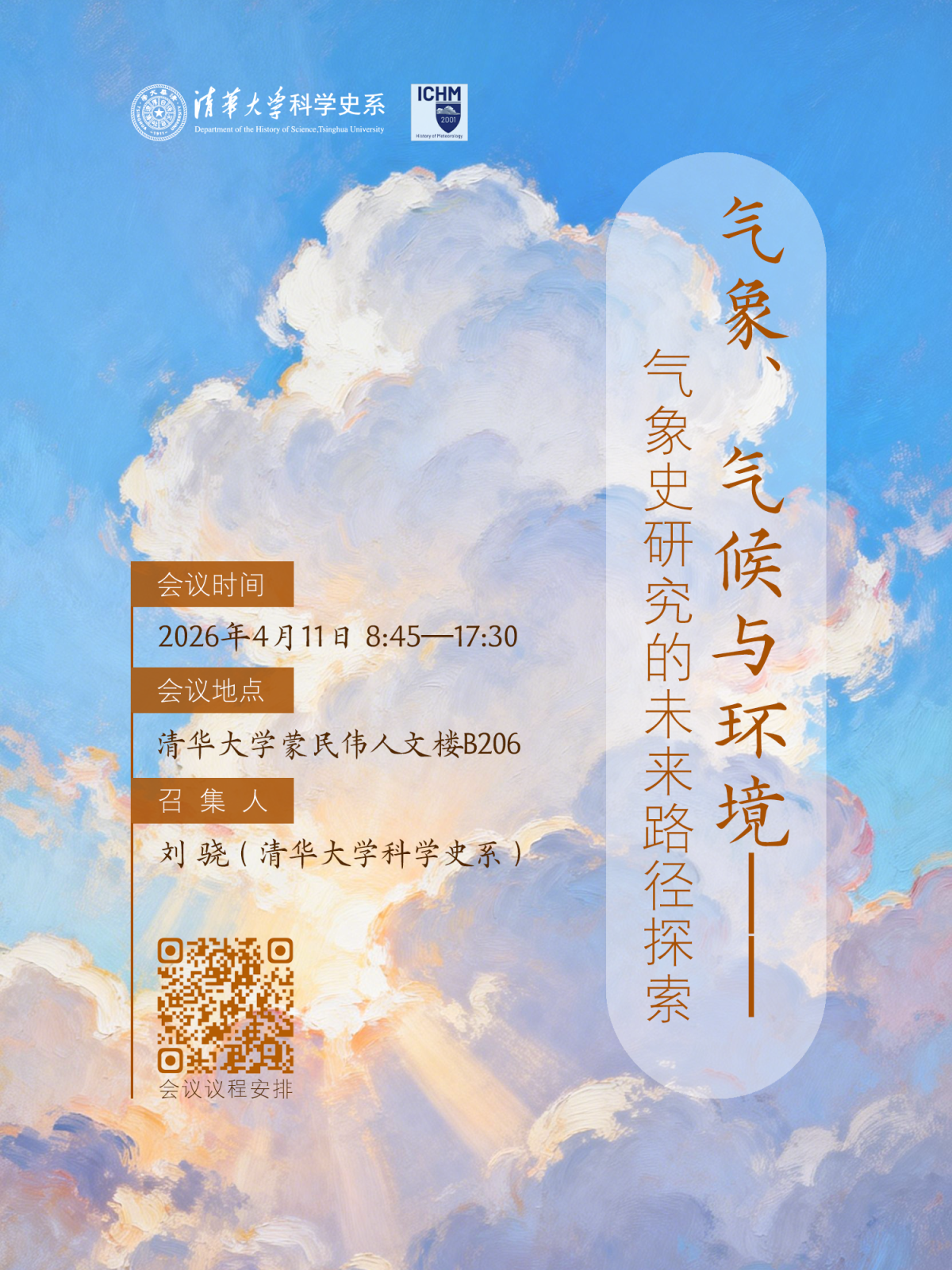
On April 11, 2026, the Third Workshop on the History of Meteorology was held at Tsinghua University. Hosted by the Department of the History of Science at Tsinghua University and co-organized by the International Commission on the History of Meteorology, the workshop was themed “Meteorology, Climate, and Environment: Exploring the Future Path of Research in the History of Meteorology”. It aimed to gather early-career researchers, students, and distinguished scholars to discuss and explore key developments, methodologies, and themes in the history of meteorology in China.
ICHM’s President Robert Naylor, and Vice President, Zhenghong Chen delivered welcome remarks online. While the workshop organizer, Xiao Liu (Tsinghua University), gave an introduction to the history of meteorology.
Workshop Report: “Climate & the Beginning of the Crisis Decades: Climate Research & Discourse During the 1970s,” Manchester, August 30, 2024
By Robert Naylor(University of Manchester and University of Cambridge), Elliot Honeybun-Arnolda (Technical University of Munich), and Ruth Morgan (Australian National University)
Due to the generous support of the International Commission for the History of Meteorology and the British Society for the History of Science, Manchester’s Centre for the History of Science, Technology and Medicine (CHSTM) was able to host a workshop exploring climate research and discourse during the crucial but often-neglected decade of the 1970s.
The 1970s have been argued to be a period of political, economic, scientific, and cultural transition. Daniel T. Rogers has described the 1970s as the beginning of an age of fracture, when the discursive, economic, and political landscape was torn apart and reformed. Eric Hobsbawm has written that the 1970s heralded “a world that lost its bearings and slid into instability and crisis.” It is during this decade that climate change narratives began to emerge into the political spotlight. As shown by scholars such as Spencer Weart and Joshua Howe, reasons for this increase in status include the rising influence of the environmentalist movement, neo-Malthusian fears of population explosion supposedly accentuated by adverse climatic effects on crop yields, and (controversially) the usefulness of climate change arguments for the nuclear power lobby during a time of energy and oil crisis.
Open to a range of disciplinary backgrounds, this workshop concerns the resonances of climate-based narratives and the growth of climate research during the long decade of the 1970s. The 1970s have been acknowledged as a period of political, economic, scientific, and cultural transition. Daniel T. Rogers has described the 1970s as the beginning of an age of fracture, when the discursive, economic, and political landscape was torn apart and reformed. Eric Hobsbawm has written that the decade heralded “a world that lost its bearings and slid into instability and crisis.” It is during this time of crisis that climate change narratives began to emerge into the political spotlight. As shown by scholars such as Spencer Weart and Joshua Howe, reasons for this increase in status include, as a few examples, the rising influence of the environmentalist movement, neo-Malthusian fears of population explosion supposedly accentuated by adverse climatic effects on crop yields, and (controversially) the usefulness of climate change arguments for the nuclear power lobby during a time of energy and oil crisis.
Historical and Popular Art Museum of Aegina, Greece
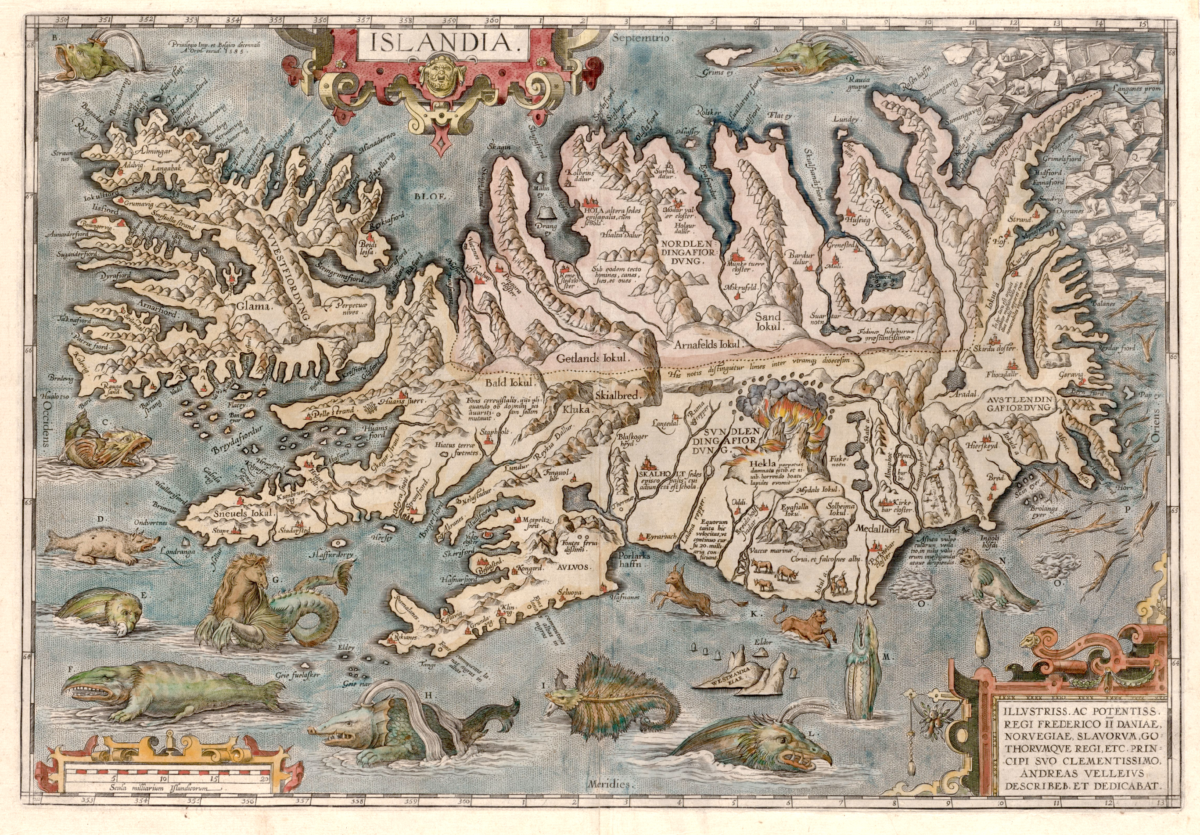
Small island countries in the Caribbean and the Pacific and Indian Ocean have always been exposed to extreme weather, but the last decades have made it clear that they are also the biggest future victims of climate change. However, islands are also key sites in the history of science. Much weather and climate knowledge derives from island sites. When European and North American countries started launching weather balloons around 1900 to measure the upper atmosphere, next to ships, islands formed key launching sites. Islands were ideal places to measure the interaction of the global atmosphere, the land and the ocean. The Keeling curve was the result of decades of accurate and continuous measurements at Mauna Loa observatory on Hawaii. Moreover, islands have also became important meteorological metaphors: think about ‘heat islands’ in urban cities, where microclimates create islands where before there were none.
Open to a range of time periods and disciplinary backgrounds, this workshop is concerned with the history of climate-orientated narratives in relation to food and famine. At a time of rebounding climate discourse, the use of climate-orientated narratives as explanatory devices for food shortages and famine has come under increased scrutiny. UN Secretary General Ban Ki-moon attracted criticism in 2007 when he attributed the Dafur conflict to climate change-induced food insecurity. More recently, in 2015, Barack Obama controversially used the Syrian civil war as an example to frame climate change as a security problem: ‘It’s now believed that drought and crop failures and high food prices helped fuel the early unrest in Syria, which descended into civil war in the heart of the Middle East. So, increasingly, our military and our combatant commands, our services […] will need to factor climate change into plans and operations.’ In 2021 the World Food Programme website claimed that families ‘are stuck in a cycle of conflict, climate shocks and rising levels of hunger’ in relation to the ongoing famine in South Sudan. This workshop aims to bring academics together to provide historical context for such claims.
Relevant work includes Mike Davis’s Late Victorian Holocausts, which argues, for example, that research into hypothetical sunspot-driven climatic changes was utilised to help excuse British authorities who oversaw the Great Famine in India. Philip Slavin (2019) has presented a complex picture of the British famine of 1314-17, where agriculturalists had to face unrelenting taxes and forced food sales alongside an inclement climate. Critiques of climate attribution theses have a long history, with meteorologist Rolando Garcia’s 1981 work Nature Pleads Not Guilty disputing the climate attribution thesis of food insecurity in the 1970s. More recent work by Jan Selby, Omar Dahi, Christiane Fröhlich, and Mike Hulme has interrogated the climate attribution thesis of the Syrian conflict, arguing that policymakers should exercise greater caution when drawing such links. Even more recently, Myanna Lahsen and Jesse Ribot (2022) argued that ‘climate-centric disaster framing can erase from view—and, thus, from policy agendas—the very socio-economic and political factors that most centrally cause vulnerability and suffering in weather extremes and disasters.’
Such discussions are rich, but often suffer from being siloed in isolated academic subjects and institutions. This workshop aims to bring together scholars across disciplines to critically examine powerful and controversial climate-based narratives around food insecurity that have long permeated public discourse.
This is an intimate 1-day event that seeks to assemble individuals with various research backgrounds (e.g. environmental history, HSTM, social sciences, atmospheric science) in an effort to generate critical transdisciplinary engagement around the intersection between climate, food, and famine in history.
April 14, 2023, 9:00-16:00 BST
Room 2.57 Simon Building, University of Manchester, UK
Deadline for abstracts (300 words): December 15, 2022
Registration information for non-presenting participants will be circulated at a later date.
Format: 20-minute presentation followed by 10-minutes of discussion at the end of each panel. 50-minute roundtable to finish proceedings.
Please send your submissions and any queries to Robert Naylor and Eleanor Shaw (conference organisers): climate.food.famine@gmail.com
A limited number of travel bursaries are available (with priority for early career researchers). Please email the above address for details. In the first instance this is an in-person event. However, if you wish to contribute but cannot travel please email the above address.
Online Conference, September 15, 2021, 8:50-16:30 UTC
As part of the celebrations for the 20th anniversary of the International Commission for the History of Meteorology we hosted an online conference over two separate time zone sessions on Wednesday 15 September 2021.
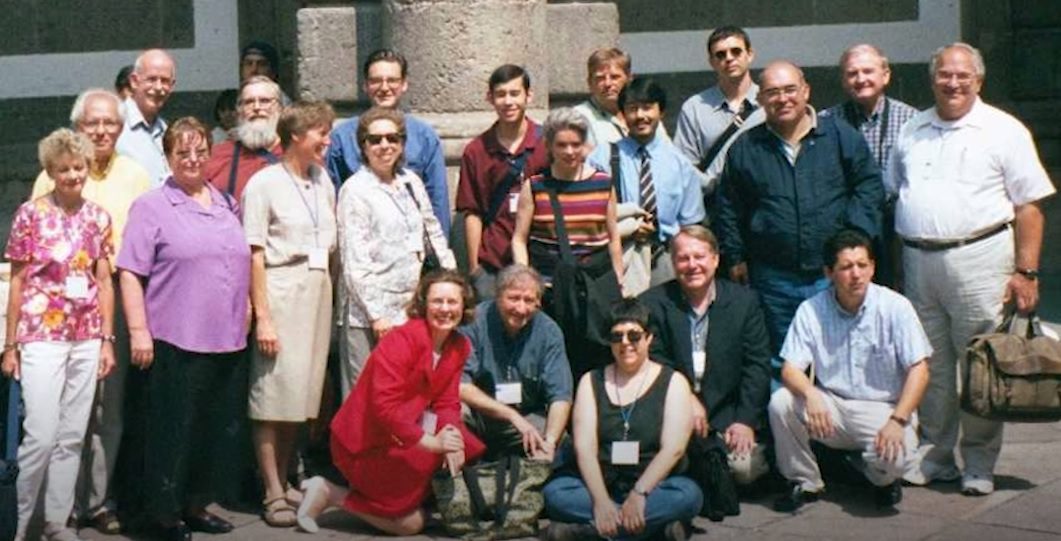
The International Commission for the History of Meteorology was founded in 2001 at the 21st International Congress of History of Science in Mexico City. Since then, we have supported numerous workshops and events, and sponsored major meetings in Polling, Germany in 2004; Beijing, China in 2005; Rio de Janeiro, Brazil in 2008 and 2017; Waterville, Maine, USA and Budapest, Hungary in 2009; Manchester, England in 2013; and Prague, Czech Republic (Online) in July 2021.
To commemorate our 20th anniversary, member Robert Naylor has been recording interviews with those involved in various roles with ICHM over the last two decades. Please click below to watch the wonderful video he has created to commemorate our anniversary!
Please do share the video with any friends, colleagues or other networks who may be interested in learning more about the work of ICHM. If you’re sharing on social media, you may prefer to use this shorter version.
You can find out more information about the commemorative online conference on the “Past, Present, and Future of the History of Meteorology” that we’re hosting on 15 Sept 2021, here. The call for papers closes on July 15, 2021.
As this is my final year as President of ICHM, I’d like to take this opportunity to thank everyone for their support over the last 4 years. We’ll be announcing all of the new Officers soon, so keep any eye on your inboxes.
2021 marks the 20th anniversary of the International Commission for the History of Meteorology (ICHM) within the International Union of History and Philosophy of Science and Technology. In celebration, ICHM will be holding an online conference reflecting on our discipline as a whole.
The ICHM was founded in 2001 at the 21st International Congress of History of Science in Mexico City. Since then, it has sponsored large specialty meetings in Polling, Germany in 2004; Beijing, China in 2005; Rio de Janeiro, Brazil in 2008 and 2017; Waterville, Maine, USA and Budapest, Hungary in 2009; Manchester, England in 2013; and Prague, Czech Republic, scheduled for 2021.
In part thanks to the commission, the history of meteorology has expanded its remit considerably, incorporating the work of academics from a wide range of institutional and disciplinary backgrounds. Echoing this development, and as reflected in the pages of ICHM’s journal History of Meteorology, the topics of the history of meteorology have become ever more diverse, including new turns towards colonial and applied meteorology. This anniversary conference provides an occasion to take stock and turn our gaze inward.
We welcome papers exploring past and current trajectories of the history of meteorology, with an emphasis on how our discipline can develop in the future. These could include reflections on our institutional shaping, pedagogical development, research turns, new initiatives, and interactions with the history of science, technology, and medicine as a whole and with the atmospheric humanities, broadly defined. As well as being a critical academic conference, this event will also be a celebration of ICHM. It will bring our community together, in scholarship and friendship, at a time when a physical meeting is difficult, connecting early career scholars with more established researchers in the field and ensuring the history of meteorology’s bright future.
Deadline for abstracts (250 words): July 15, 2021
Format: 15-minute presentation followed by 15-minutes of discussion.
Registration information for non-presenting participants will be circulated at a later date.
We welcome pre-recorded contributions if you are unable to attend live due to different time zones, and we are also willing to work with you to accommodate for your sleep schedule (e.g. putting your paper towards the end of the conference if you are on the US west coast).
Separate to the conference, we are also interested in compiling and perhaps circulating personal stories from ICHM’s history, whether it involved beer gardens in Polling, samba dancing in Rio, or lobster in Maine.
Report written by Zhenghong Chen, China Representative for ICHM
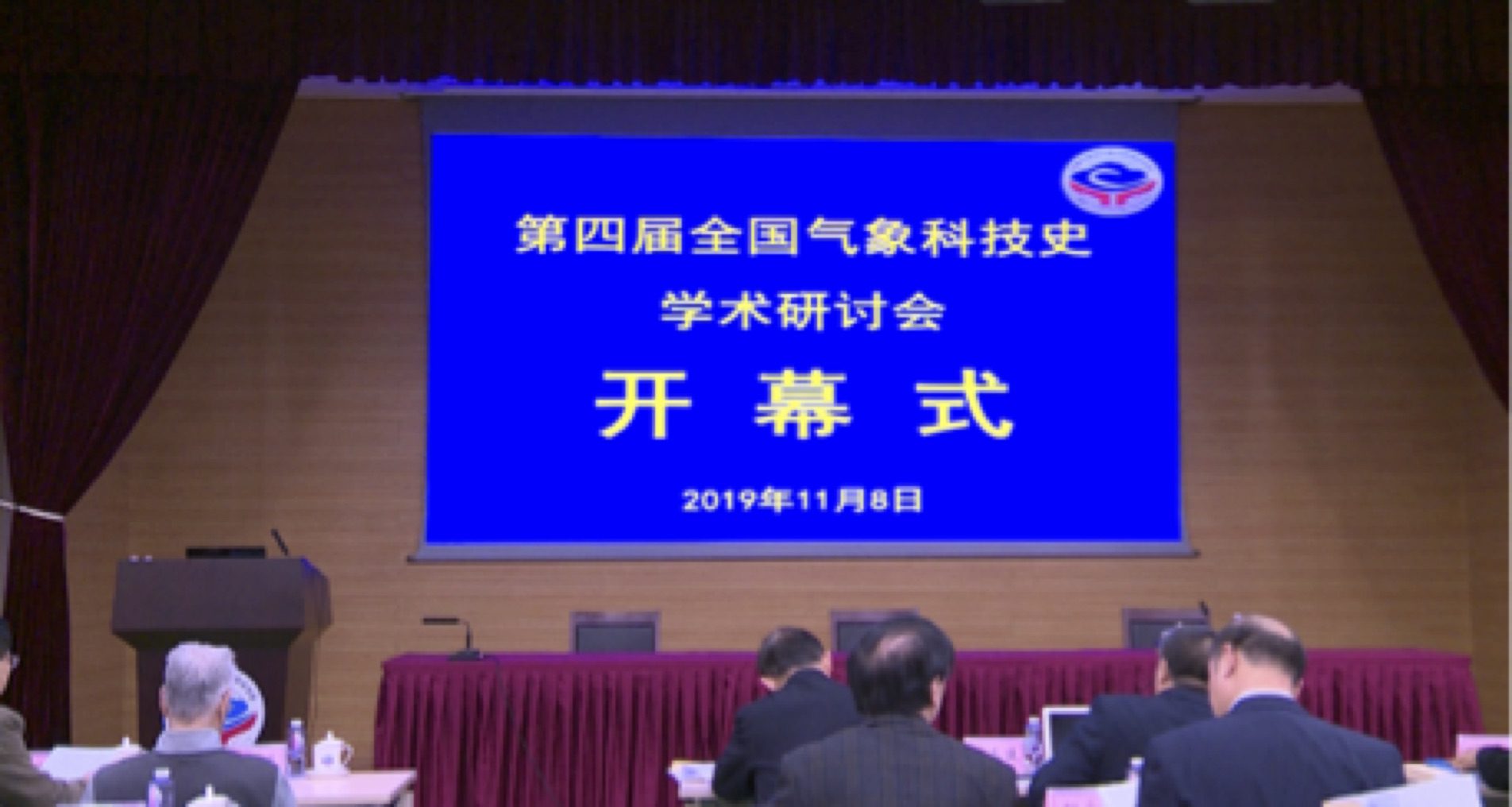
The Fourth National Conference on the History of Meteorological Science and Technology was held in Beijing on 8-9 November 2019. The event was hosted by the Committee on the History of Meteorological Science and Technology of the Chinese Society for the History of Science and Technology and Department of Science and Technology, and by the Climate Change Section of China Meteorological Administration. The conference was organized by the China Meteorological Administration Training Center (CMATC), and co-hosted by the Institute of Atmospheric Physics of the Chinese Academy of Sciences at Nanjing University, by the Department of Atmospheric and Oceanic Sciences of Peking University, and by the Institute of Science and Technology History of Nanjing University of Information Science and Technology. The main theme of the conference was “the enlightenment and history of meteorological developments for the 70th anniversary of the people’s Republic of China”.